
ZUNI, N.M. (Oct. 29, 2025) — This fall, 523 Zuni schoolchildren are exploring healthy lifestyles through programs led by the Zuni Youth Enrichment Project. In partnership with the Zuni Public School District, ZYEP staff members are engaging younger children for four weeks during a regular specials class at Shiwi Ts’ana Elementary School, and older youth through a semester-long elective course at Zuni Middle School.
The elementary school class runs Oct. 6 to 31; due to cuts to Supplemental Nutrition Assistance Program (SNAP) funding, this is the last year for the program. The middle school elective began Oct. 15 and concludes Dec. 19.
“It is essential to fund programs like this, not just here in Zuni, but across America,” said Brittny Seowtewa, ZYEP’s food sovereignty coordinator. “When we interact with our young children in the schools, we have priceless opportunities to create meaningful relationships and build lasting confidence in nutrition and physical education.
“To create long-term change, we must reach children early, when their minds are most moldable, to help them grow into the best versions of themselves.”
“Eat Smart to Play Hard” at Shiwi Ts’ana Elementary School
Made possible with assistance from the New Mexico Department of Health’s Healthy Kids Healthy Communities, ZYEP’s elementary school class incorporating the state’s Eat Smart to Play Hard curriculum is offered once per school year. This fall, it’s available to 503 students in prekindergarten through sixth grade, as part of teacher Shanell Leekya’s physical education class.
Preceding the start of the four-week program, ZYEP’s food sovereignty team hosted a luncheon for Shiwi Ts’ana Elementary’s teachers, staff and faculty to show appreciation for all they do for Zuni youth. The Sept. 30 luncheon was an opportunity for the nonprofit youth organization to share information about Eat Smart to Play Hard, and inform teachers that this is the program’s final year.
It also was an opportunity to share a nutritious, homemade meal. The menu included bison stew with tepary beans, hominy, zucchini, butternut squash, mushrooms in vegetable broth, and a hearty salad with kale, cherry tomatoes, cucumbers and cooked wheat berries with a prickly pear vinaigrette.
The four-week Eat Smart to Play Hard campaign officially kicked off the following Monday, Oct. 6. Designed to encourage young people to eat more fruits and vegetables and to be more physically active, the program tracks progress through “fun books” for third through fifth grades and “fun maps” for prekindergarten, kindergarten, first, second and sixth grades.
“Sixth grade was moved from the middle school to the elementary school this year, so we included them, too,” said Tahlia Natachu-Eriacho, ZYEP’s executive director. “The state originally created Eat Smart to Play Hard for third through fifth grades, but our team went above and beyond to include all elementary grades in the program, prekindergarten through sixth. Our kids deserve it.”
Each book or map helps students track their physical activity as well as their fruit and vegetable intake, with a goal of 2.5 cups of vegetables and 1.5 cups of fruit daily. When they bring their trackers back, signed by a parent or guardian, they can win prizes such as frisbees, dodge balls, beach balls and jump ropes.
Throughout the program, students also are playing games like Red Light Green Light, Freeze Tag, Dance Off and ABC Jump Rope.
“My favorite part of the program is seeing the smiles on the kids’ faces when the leaders join the fun games and activities,” Seowtewa said. “The kids are especially motivated when we play along with them in the games.”
She noted that Khassia Hattie and Zachary James, ZYEP food sovereignty leaders, bring their own high levels of enthusiasm to the program. The kids can’t help but want to join the fun.
“The bonds we make with the youth are my favorite part of the program,” Hattie said. “Through these bonds, we help them see their potential through understanding, empathy, and encouraging them to be the loving people they are—for themselves, their families, and our community.”
James said his favorite part of Eat Smart to Play Hard is seeing how much the kids enjoy it. They’re excited to take home fun recipes that they can learn and share with their families, and they look forward to participating in the exercise activities that the ZYEP team pairs with the recipes.
“We are so grateful for the kindness and support we have received through this program,” he noted. “Though the program is ending, our dedication to healthy recipes and fun activities—and our love for the kids—will continue.”
Traditional Cooking Elective at Zuni Middle School
During this fall semester at Zuni Middle School, ZYEP has partnered with Zuni language and culture instructor Pamela Tsadiasi to offer an elective class for 20 students with an emphasis on traditional Zuni cooking. The class was made possible with support from the Substance Abuse and Mental Health Services Administration (SAMHSA), the New Mexico Behavioral Health Services Division, and the ZMS team.
“I welcome ZYEP’s collaboration with Zuni Middle School, and the classes are off to a great start,” Tsadiasi said. “Our students are amazed and enjoy the activities the ZYEP staff present. Welcome, ZYEP staff, to ZMS. Your knowledge and creativity are taken with gratitude.”
Throughout the course, the students engage in hands-on learning rooted in cultural practices, seasonal teachings, and the Zuni Language Pacing Guide. This learning reinforces A:shiwi core values, cultural connectedness, and use of the Zuni language.
The curriculum follows a holistic format to deepen the students’ understanding of the importance of Zuni culture in relation to food, health, and the A:shiwi (Zuni) way of living. The class weaves together traditional art, nutritional education, and A:shiwi knowledge to strengthen cultural identity, health, and resilience.
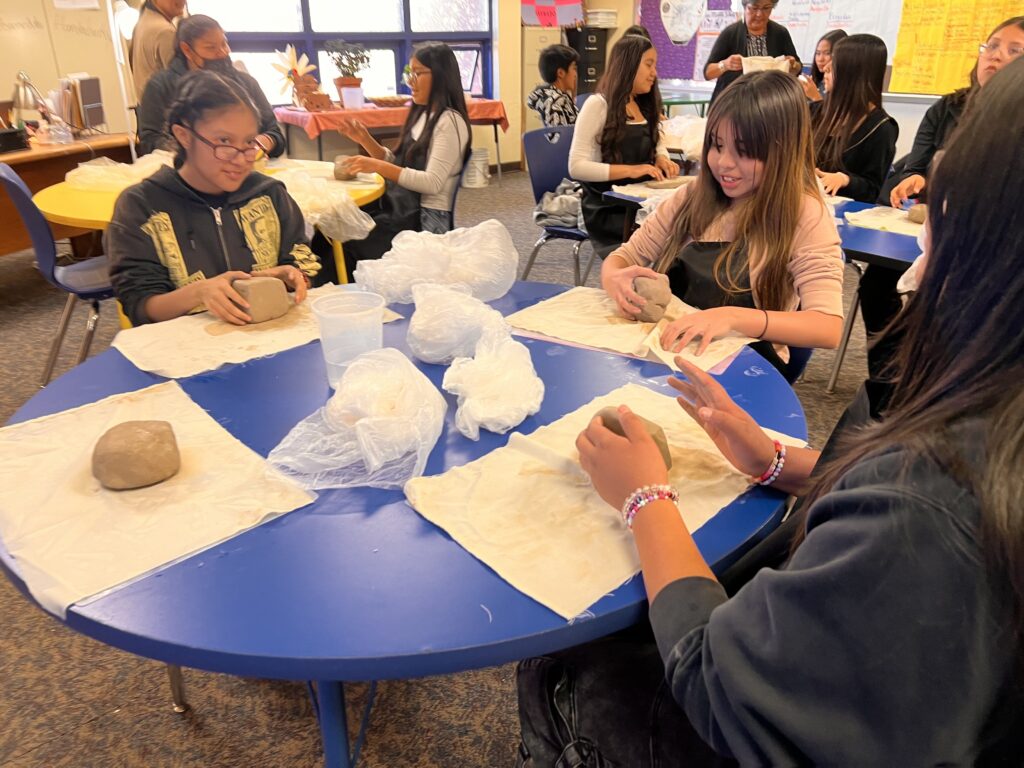
Each week follows a consistent rhythm. On Mondays, Wednesdays, and Fridays, students learn about the history, meaning, and cultural significance of traditional arts like pottery, leatherwork, beading, and basketry with Leader Kandis Quam, ZYEP’s arts leader; they also have opportunities to create their own art.
On Tuesdays, James leads the course’s food sovereignty and nutrition component. Students learn about water, healthy eating, and food preparation, with cooking demonstrations that integrate both traditional and contemporary practices.
On Thursdays, cultural educator Enric Tsalate, who also serves as ZYEP’s built environment leader, shares traditional Zuni knowledge with the students. Lessons focus on Zuni values, ancestral ways of life, and seasonal teachings that connect land, food, and community health.
“I am excited to give the students the insights I didn’t get during my school years, as well as the things I’ve learned through my lived experience,” Tsalate said. “I’m also dedicated to sharing knowledge passed down by people who are no longer here. It’s invaluable.”
As part of their holistic approach, the ZYEP staff designs all the activities to fit within specific themes. With the harvest theme, for example, the food sovereignty team made trail mix with the group and shared information about seed-saving, then Tsalate taught the students how the Zuni food system is connected to the elements and patterns of nature.
The youth also learned how environmental stewardship and conservation practices play an important role in Zuni culture, and under Quam’s guidance, they made offering bowls, discussed the importance of the design elements, and gained an understanding of the work that goes into creating Zuni art.
“I helped introduce how to make an offering bowl out of clay,” said Tara Wolfe, ZYEP’s program manager. “The students were excited. One student was unsure because he had never done something like this, but after a few minutes, he was shaping his bowl!”
At the end of the session, that particular student was beaming about the progress he’d made. He even asked to take some clay home so he could show his family and keep working with it.
“This is how we know that the programs are reaching the youth and encouraging them to reach their full potential,” Wolfe said.
To learn more about the Zuni Youth Enrichment Project and its programs, and for information about making donations, partnering with ZYEP, and volunteering, call (505) 782-8000 or visit zyep.org. To stay up to date on the latest news and events, follow the nonprofit youth organization on Facebook (/zuniyouthenrichmentproject), Instagram (@zuniyouthenrichmentproject), YouTube (/ZuniYouth), and TikTok (/zyep09).
Founded in 2009, the nonprofit Zuni Youth Enrichment Project is dedicated to promoting resilience among Zuni youth so they will grow into strong, healthy adults who are connected with Zuni traditions. ZYEP fulfills its mission by providing positive role models, enriching programs, and nurturing spaces that contribute to the healthy development of Zuni youth. ZYEP strives to provide every child with the encouragement and opportunities they need to reach their full potential.