
ZUNI, NM (Sept. 25, 2026) — The Zuni Youth Enrichment Project will bring seed-saving activities, recipes and a hands-on pickling demonstration to the Zuni Fair on Sunday, Oct. 4. This will kick off a busy fall season that includes an expanded Family Cook Night series, the final phase of the apprentice-family pilot project and plenty of harvest activity in local gardens.
ZYEP originally planned to host a seed-saving and recipe-sharing workshop at Ho’n A:wan Park this month. When a larger cultural event in the Pueblo of Zuni prompted organizers to move the Zuni Fair to early October, the youth project’s food sovereignty team decided to bring the workshop to the fair instead of hosting it at the park.
“Ho’n A:wan Park is a little out of the way for some families,” explained Brittny Seowtewa, ZYEP’s food sovereignty coordinator. “People will be in a central location for the fair, so we wanted to take advantage of that opportunity.”
ZYEP’s free station will feature seed-saving education and activities as well as garden recipes for families to take and share. The team also is planning a pickling demonstration, with plenty of cucumbers, brine and dill on hand so participants can chop their own cucumbers, add them to the brine and take the jars home.
The fair comes as the growing season transitions into the fall harvest. Food Sovereignty Leaders Khassia Hattie and DeVon Bowekaty have been busy pickling cucumbers, tomatoes are producing well, and cooler temperatures are bringing an abundance of leafy greens such as kale.
Hattie also has been dehydrating and grinding garden herbs to create ZYEP’s own dried spices. Some of this locally grown produce will make its way into this year’s Family Cook Nights, which return Oct. 22 and continue Nov. 19 and Dec. 17.
The popular monthly series gives Zuni families opportunities to prepare healthy, plant-based meals together, with ZYEP providing recipes, ingredients and guidance. Due to high demand and a wait list in 2025, the youth project is expanding program capacity from 15 to 20 families, all of whom will participate virtually.
“Last year was our first year using an all-virtual format, and it went much more smoothly,” Seowtewa said. “Families could cook together in their own kitchens, where everyone could participate, and we had more room to lead the classes effectively while easing the burden on our utilities.”
Last year’s menus included a Halloween-themed ratatouille, Frankenstein pesto pasta and spider sorbet in October; ramen, steamed edamame, carrot salad and mango sticky rice in November; and Three Sisters stew, blue corn pancakes and banana cake during shi’deshkwi, Zuni’s winter solstice fasting period, in December.
This fall’s Family Cook Nights also will mark the final phase of the first year of ZYEP’s two-year, apprentice-style family garden project. Three Zuni families have worked closely with the food sovereignty team throughout the growing season, learning about traditional agriculture and developing their own gardens.
They will continue their work this fall, exploring the harvest season and learning recipes that incorporate garden produce. The first year of the apprentice project will conclude in December, with three new families participating in 2027.
ZYEP’s food sovereignty work continues through community partnerships as well. At the Indian Health Service campus garden, for example, IHS staff members have been watering and maintaining the garden while ZYEP supports the infrastructure and refills its water tanks as needed.
Recently, IHS Disease Prevention Specialist Sandra Mcmanama contacted ZYEP for a water refill and shared that IHS is working with families experiencing food insecurity. Produce from the garden, including cabbage, is now reaching some of those families.
“Knowing they have access to healthy, locally grown and nurtured food is a major highlight for us,” Seowtewa said.
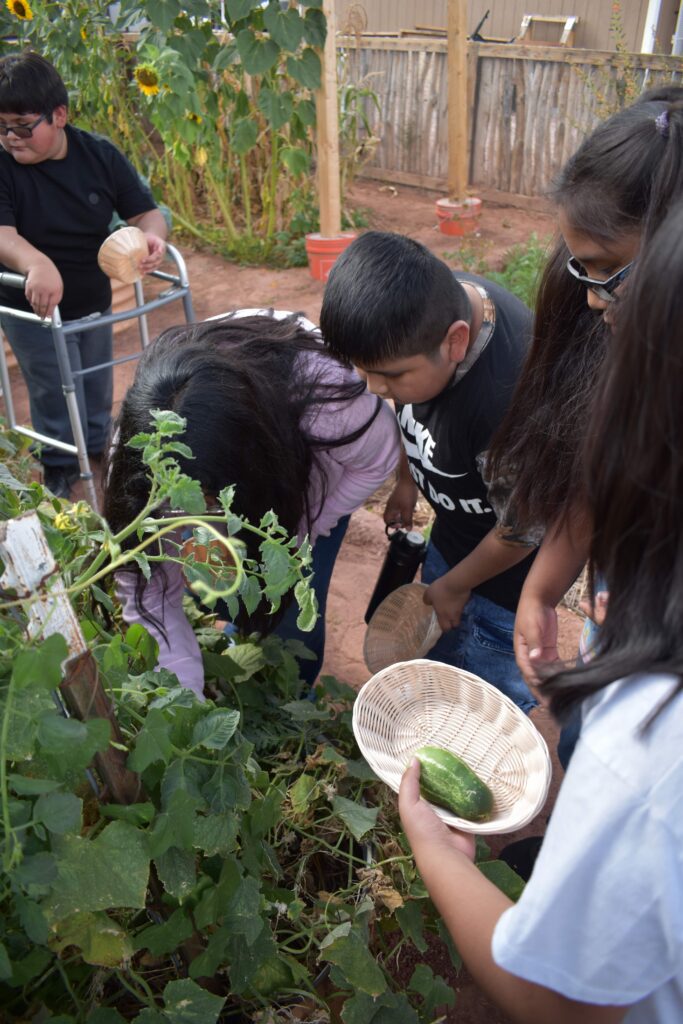
Schoolchildren also are experiencing the harvest firsthand. Earlier this month, Shiwi Ts’ana Elementary School students who are participating in ZYEP’s Rooted in Healthy Traditions after-school program visited Ho’n A:wan Park. They harvested corn and taste-tested cherry tomatoes, Acoma melon, Sugar Baby watermelon, cucumbers and carrots.
The children’s favorite was the cherry tomatoes, which Seowtewa described as the perfect blend of tart and sweet. The watermelon got a different reaction.
“They were spitting out the seeds,” Seowtewa said with a laugh. “They were so surprised, because the watermelons at the grocery store are seedless. It was an important teaching moment. We explained that our plants are non-GMO, and they need to produce seeds to reproduce.”
For the children, this connected an unexpected experience during a taste test with the seed-saving lessons at the heart of the food sovereignty team’s fall programming. Seowtewa also noted that experiences like these spark children’s curiosity.
“They might feel encouraged to try other unfamiliar foods, look for something new at the grocery store or even start a garden at home,” she said.
With guidance from its Agricultural Advisory Committee, ZYEP’s food sovereignty initiative is dedicated to providing access to resources, instruction and knowledge sharing for people of all ages and abilities. The initiative is made possible with support from Newman’s Own Foundation, New Mexico Department of Health’s Healthy Kids Healthy Communities, Seventh Generation Fund for Indigenous Peoples, Substance Abuse and Mental Health Services Administration (SAMHSA) and McCune Charitable Foundation.
To learn more about the Zuni Youth Enrichment Project and its programs, and for information about making donations, partnering with ZYEP, and volunteering, call (505) 782-8000 or visit zyep.org. And, to stay up to date on the latest news and events, follow the nonprofit youth organization on Facebook (/zuniyouthenrichmentproject), Instagram (@zuniyouthenrichmentproject), YouTube (/ZuniYouth), and TikTok (/zyep09).
Founded in 2009, the nonprofit Zuni Youth Enrichment Project is dedicated to promoting resilience among Zuni youth so they will grow into strong, healthy adults who are connected with Zuni traditions. ZYEP fulfills its mission by providing positive role models, enriching programs, and nurturing spaces that contribute to the healthy development of Zuni youth. ZYEP strives to provide every child with the encouragement and opportunities they need to reach their full potential.